

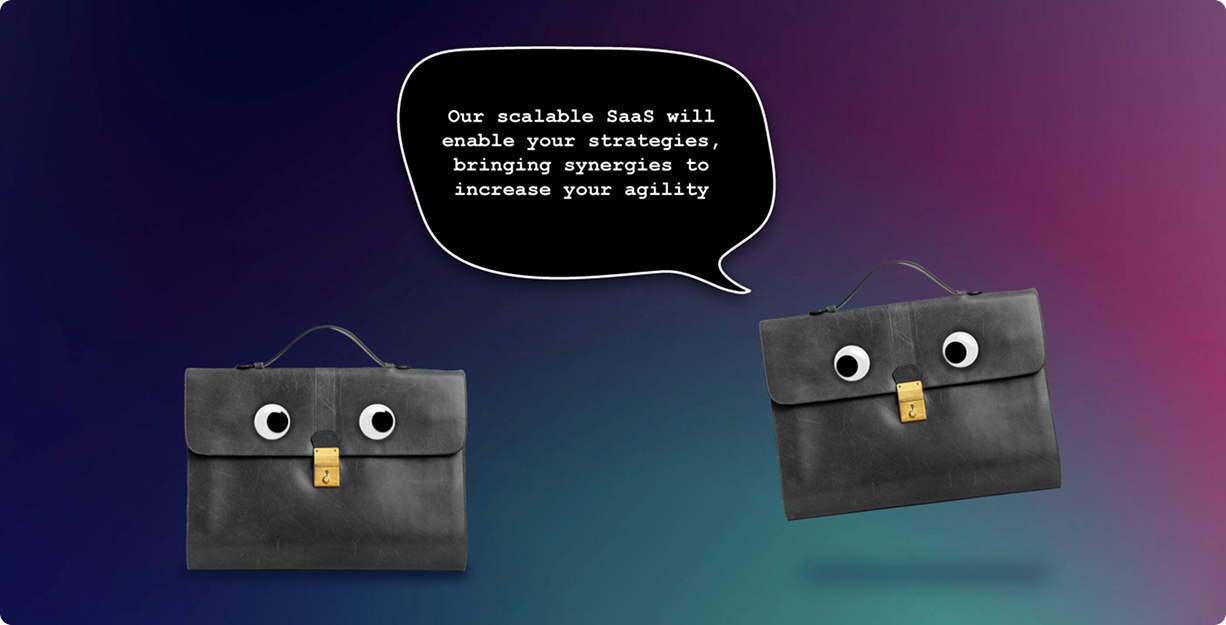
We’ve all seen another blue healthcare company using the same stock photos. We’ve watched tech companies switch to “dark mode” to look edgier. We’ve read language like “seamless,” “scalable,” and “end-to-end” until it has lost all meaning. As our owner Dave Levi often says, it can sound like briefcases talking to briefcases.
AI has changed the speed at which content (as many words as you want, really) can be produced. It is like every company has hired a single copywriter who has been trained to write like the convergence of everything that has ever existed — which is to say — a lot of sameness.
When Italy banned ChatGPT for a month in 2023, Instagram copy from Milan restaurants became measurably less similar to each other. Once the ban lifted, the sameness came back (Source: 2025 working paper by Liu et al. on SSRN).
We’re also watching AI overuse respected writing practices and turn them into AI clichés (let it be known: We loved the em dash before it was cool, and we will not let it be stigmatized!).
So, what do we do about it?
Sameness is the opposite of differentiation. We can’t accept it for our marketing materials—not if we want to build a brand identity people can recognize and remember.
Could you accurately identify the brand from phrases like these?
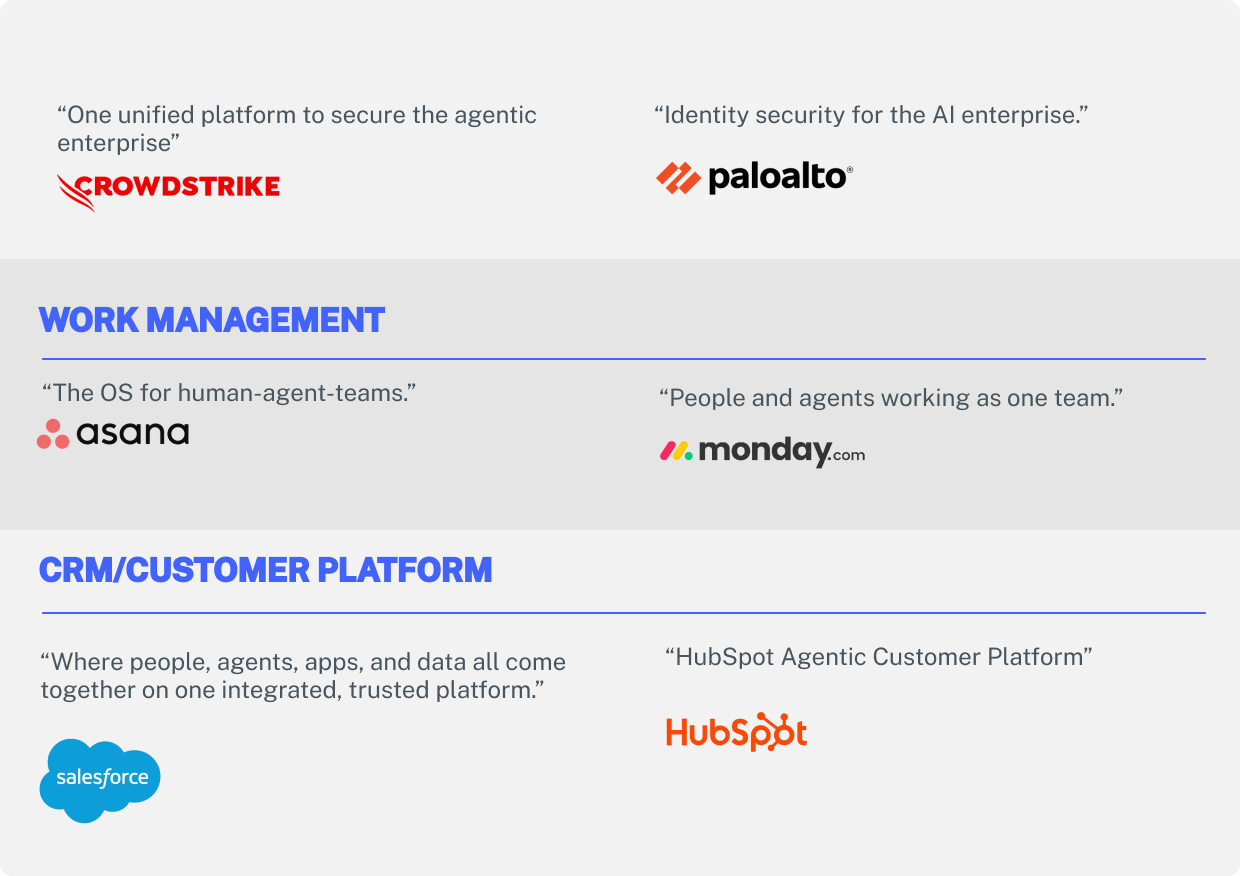
“One unified platform to secure the agentic enterprise”
“The OS for human-agent teams”
“People and agents working as one team”
“Where people, agents, apps, and data all come together on one integrated, trusted platform,”
These are all live website headlines from major companies like Crowdstrike, Asana and Salesforce.
We’ve all been guilty of making something similar to what we’ve seen before, and we’ve also all felt like a competitor is definitely copying us. We feel the sameness, and we don’t like it.
There is a potential redemptive twist: If other brands’ marketing is becoming noise, your brand has a chance to cut through it all.
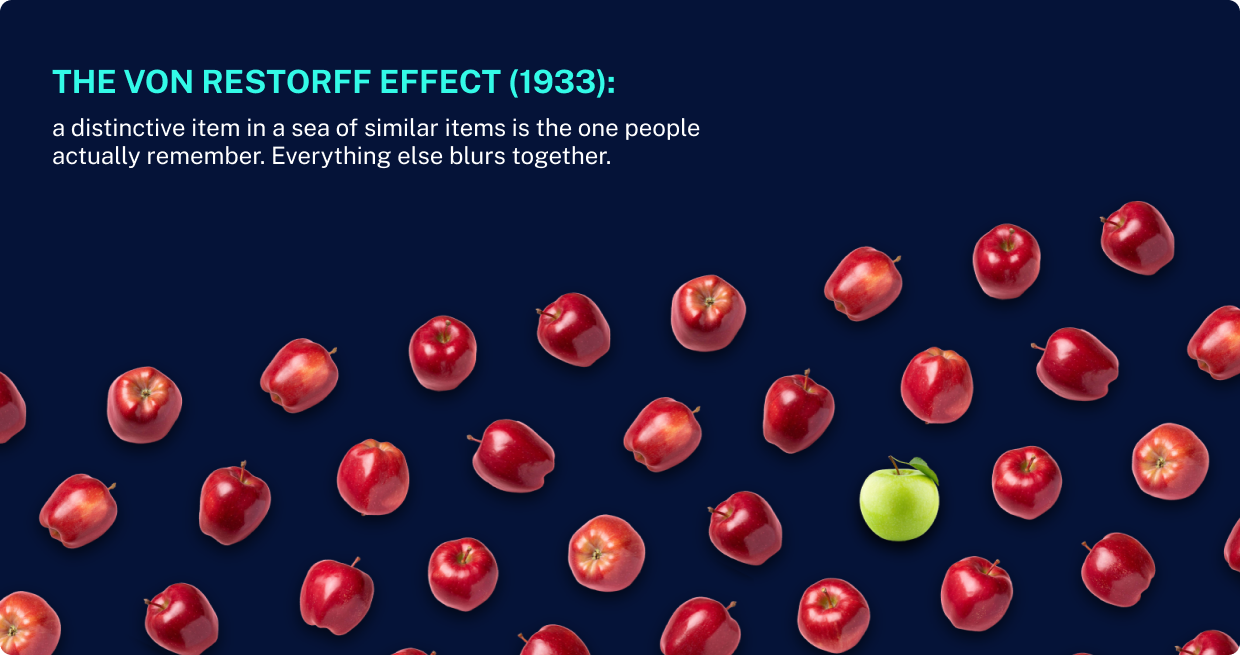
Long before AI (in 1933), The Von Restorff effect described the phenomenon where a distinctive item in a group of similar items is the one people remember.
A significant amount of AI-produced content feels…off. At least when it doesn’t have properly meaty sources to consult or a highly involved human editor.
Its default is to take well-known material and try to make every sentence the BEST sentence. This often makes it difficult to understand the hierarchy and depth of ideas. It can be smooth to read while communicating very little.
Go with me here on an analogy I’ve been playing with: AI is churning out junk food. Quality content needs some fiber. For most of my career, editing has mostly involved taking a solid draft from a writer, cutting out some of the fiber and sprinkling a little salt.
AI writing feels like it’s all salt. It’s salty, spicy, savory Doritos. And the longer the copy, the more Doritos it feels like you’re eating. Eating a whole bag of Doritos is unsatisfying. AI made generic marketing faster and cheaper to produce at scale. In the process, it is moving generic content from informative and dry to empty and exhausting.
Good content needs substance: a new idea, a distinct point of view and a content strategy built to deeply engage the right people. Good content is slow-cooked carnitas over brown rice with some crushed Doritos on top. Good content needs flavor AND fiber. Excitement and substance.
Marketers are increasingly told we need to prove ROI on everything, which makes experimenting—and developing messaging that resonates at a human level—feel dangerous. A test with no historic record of efficacy is hard to defend in a budget meeting. Teams default to what is safe, proven, and, usually, unoriginal.
Brave brands are willing to try things nobody else in a category will risk. It means coming up with unique ideas (hard), convincing others about those unique ideas (hard) and knowing when to accept that an idea isn’t resonating (hard).
But it can also mean going through a difficult creative process only to reach a euphoric sense of accomplishment as you watch an idea really work (hello, gratification).
Brands must bring back the full creative process, prepare for it to make them feel like they don’t know what they’re doing, and be willing to treat failures as simply data to learn from.
Getting to work alongside or within the creative process is usually part of what drew people into marketing, but it often dies slowly for the sake of efficiency.
At Words At Work, we’ve started to term our approach to the creative process as “Thinking Until It Hurts.” There are several stages, and most people come out of it with an idea much too early. No one likes exhaustion or pain or feeling empty of ideas, but true creativity nearly always involves feeling that way at some point.
It is the kind of rigorous creative work we bring into our brand, messaging and content workshops.
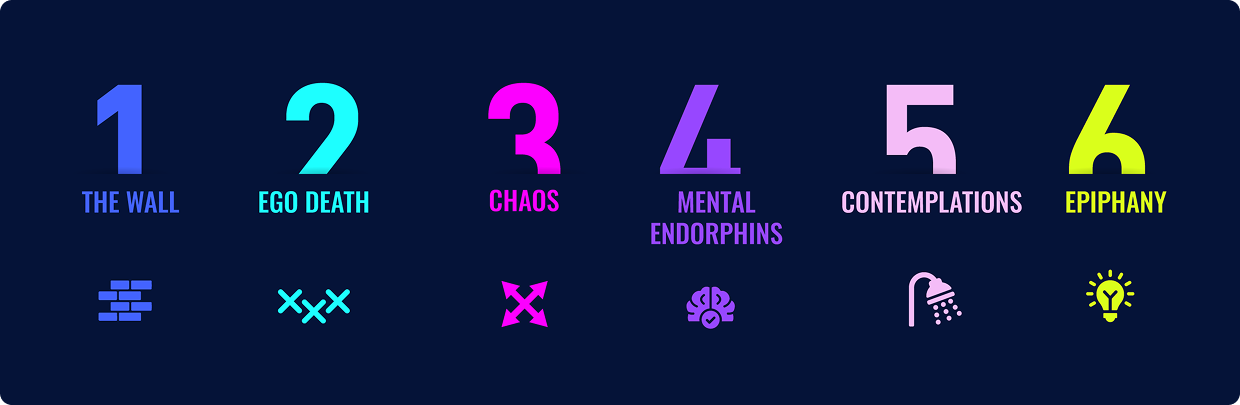
AI has made this part of the creative process faster, and it’s a great use case for it. When you are chasing something truly creative, and an idea came straight out of AI or right from the top of your head, it’s probably just one of the bad ideas that needs to get out of the way.
Sometimes at this stage, you keep coming back to a core idea. Sometimes you’re right, but usually your original idea is so loud because it’s like what you’ve already seen before. Our brain likes things to feel familiar.
This is when it starts to hurt. You’ve sat with “your idea” long enough to know it isn’t right, and you feel like you’ve exhausted every idea your brain is capable of giving you. Maybe you’re just not that creative, you think, and maybe you will never reach a good idea. Has it all been a waste of time and effort?
YOU KEEP GOING! You start thinking of wacky, crazy ideas your boss would never approve. You think of things that make you laugh. Maybe you wonder if you should be a comedian instead of a marketer. You start trying to involve those around you, and they don’t know what you’re talking about. You think about your product in a way you’ve never seen it before, and it feels like everything is making sense except you still don’t know what to do.
When you stop urgently scribbling down thoughts or following side quests in your head, it’s probably time for a snack. Maybe sleep on it. Try doing some other, less creative work. Stepping away is how our brain does its best sorting — but only if you’ve already thought until it hurts.
You come back to your previous brainstorm and look at your notes. They’re nonsensical, but the epiphany is there somehow.
Now you have to share it out loud and get past objections that will inevitably come first because it’s different than what has been done before
Often, when you share your idea, the internal objections arrive quickly: “this might be hard to get approved” and “this doesn’t sound polished enough.” It can be tempting to make a million little compromises until it fits a more comfortable mold.
Below are some questions you can use to push yourself and your team.
Being “uncopyable” often involves being brave, showing vulnerability and accepting risk. It’s hard, and it takes a lot more time than producing things similar to what has been done and liked before.
But isn’t sameness worse? If your team is ready to turn a distinct point of view into a brand people can recognize, explore our brand, messaging and content methodologies.
